Aerospace Environmental Testing
Environmental Test Chambers for the Aerospace & Aviation Industry
Ensure your components soar above the rest.
The aerospace and aviation industries rely on AES for high-performance aerospace environmental testing solutions that accurately simulate extreme atmospheric conditions. Our test chambers are essential for ensuring that commercial and military aerospace equipment, components, and parts meet stringent standards and specifications, such as those set by SAE International and RTCA. By replicating these harsh, real-world environments, AES chambers help verify long-term performance, safety, and component durability before takeoff.
Quality, reliability, and safety are paramount in the aerospace and aviation sectors. Every component and system must adhere to rigorous quality assurance standards to maintain these critical values. AES environmental test chambers are integral to this process, providing the necessary conditions to evaluate and improve the reliability and safety of aircraft parts and systems.
AES is a trusted partner for the aerospace and aviation industries because of our unwavering commitment to quality and our expertise in test chamber manufacturing. Our chambers are designed to meet the rigorous demands of aerospace environmental testing, ensuring that engineers and test teams can depend on us to support their testing needs.
Test Chambers for Aerospace & Aviation: Talk to an Expert
What's at Stake When Aerospace Environment Testing Falls Short
Aerospace components face a unique combination of environmental stresses that most industries never have to account for. A single flight can subject hardware to temperature swings of over 100°C, rapid pressure changes, sustained vibration, humidity, and corrosive salt exposure, often within hours.
When environmental testing doesn't match that reality, the consequences ripple across the entire program.
- Failed certifications: If a component can't demonstrate it survives worst-case environmental stresses, including thermal cycling, mechanical shock, and corrosion, it won't pass qualification. The program stalls until the design is reworked and retested.
- Grounded fleets and program delays: A field failure discovered after certification can ground entire aircraft lines while engineers isolate the root cause and requalify affected parts.
- Costly redesign cycles: Weaknesses caught late in development cost exponentially more to fix than those caught during early environmental screening. The sooner your chamber exposes a problem, the cheaper the solution.
- Audit and compliance risk: Quality assurance teams and regulatory auditors require traceable, repeatable test data. If your test environment can't replicate the full range of environmental conditions a component will face in service, your documentation won't hold up.
Choosing the Right Environmental Test Chamber for Aerospace Equipment Testing
The chamber you choose directly affects the quality and efficiency of every test you run. A mismatch between your testing requirements and your chamber’s capabilities leads to inaccurate data, retesting, and wasted time. Here’s what to evaluate:
Temperature range and ramp rate
Aerospace qualification profiles often require rapid transitions between extremes. Make sure your chamber can hit the range and change rate your test standard calls for—whether that’s thermal testing per RTCA DO-160 or thermal cycling under MIL-STD-810. AES temperature chambers are built for the rapid cycling that aerospace programs demand.
Humidity and corrosion capability
Components exposed to moisture, condensation, or salt spray need chambers that maintain precise humidity testing conditions over extended cycles. AES humidity chambers are available in benchtop, stackable, and walk-in configurations to fit your test articles and lab layout.
Chamber size and workspace
Match your chamber’s interior volume to the components you test, from small avionics modules to full sub-assemblies. Proper airflow around the test article is critical for uniform conditions. If your timeline is tight, AES offers in-stock test chambers ready to ship.
Software and data logging
Aerospace qualification demands traceable, auditable test data. AES chambers come standard with AESONE CONNECT®, which provides remote monitoring, real-time test control, and historical data access—capabilities that simplify compliance documentation.
Combined environment capability
Some aerospace equipment testing profiles require temperature, humidity, and vibration applied simultaneously. Confirm your chamber can integrate with vibration tables or altitude simulation if your standards call for combined stresses.
RELEVANT ENVIRONMENTAL TEST CHAMBERS
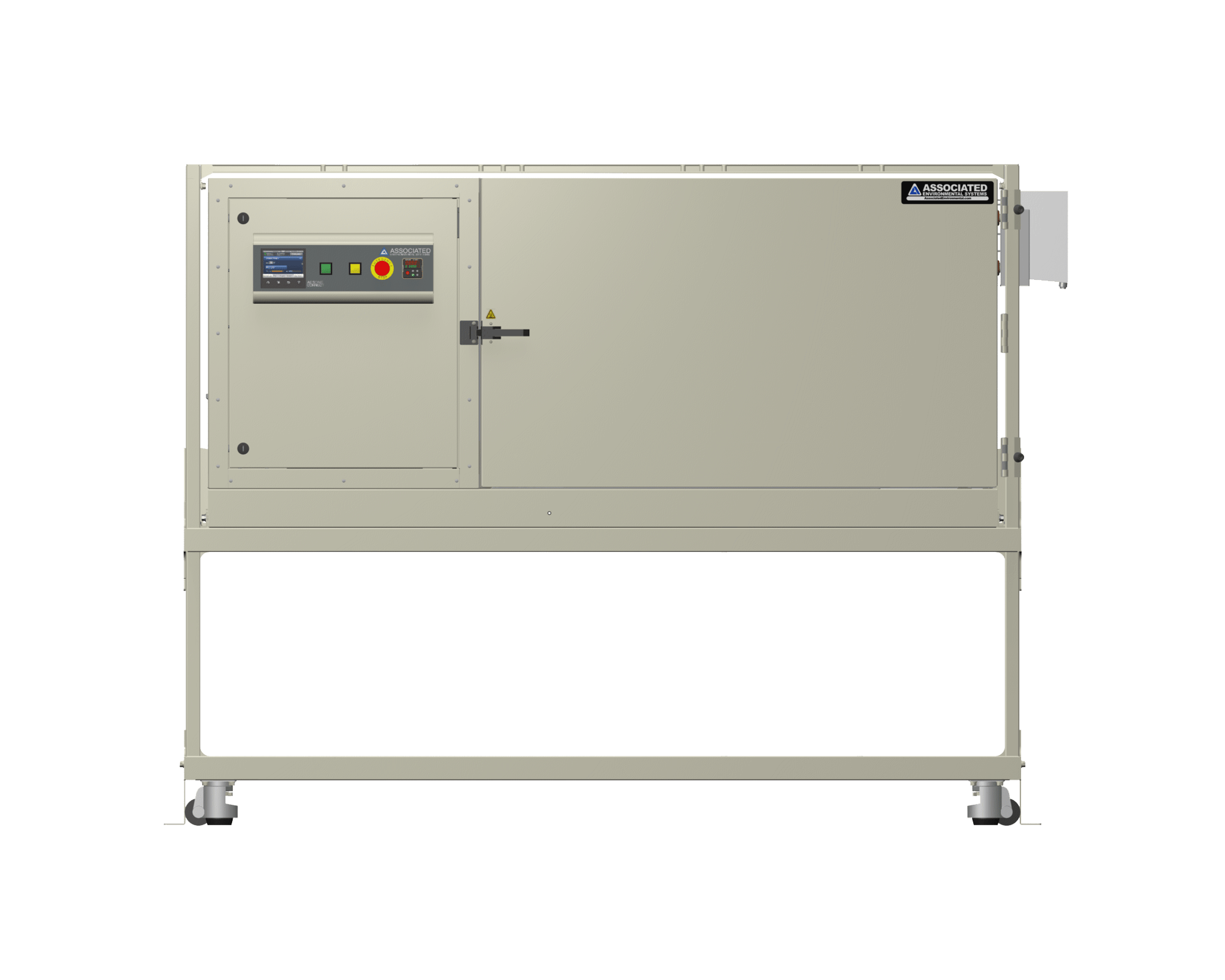
TEMPERATURE & HUMIDITY CHAMBERS
Conduct temperature and humidity cycling testing. Benchtop, stackable, and walk-in room options
Workspace Range: 2 to 264 cu ft
THERMAL SHOCK CHAMBERS
Testing products from one temperature extreme to the other in a pneumatic basket.
Workspace Range: 2 to 8 cu ft
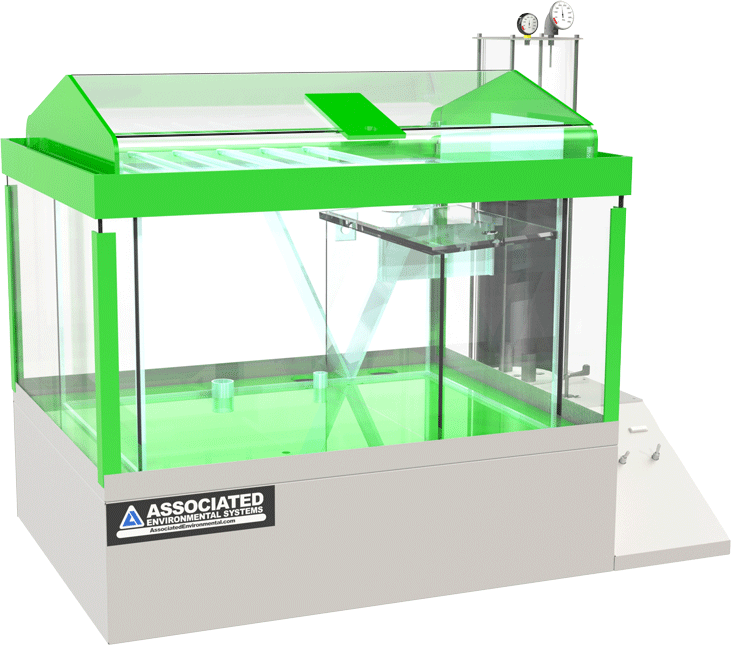
SALT SPRAY CHAMBER
Creates a corrosive environment without introducing other contaminants into the test area.
Workspace range: 4 to 16 cu ft

Relevant Standards
Clients
Frequently Asked Questions
What is aerospace environmental testing?
Aerospace environmental testing is the process of exposing aerospace components, systems, and materials to controlled environmental stresses. This includes temperature extremes, humidity, vibration, pressure, and corrosion to verify they’ll perform safely in real-world operating conditions. It spans the full development lifecycle, from initial material screening and design validation through formal qualification and production acceptance.
What types of environmental tests are used in aerospace?
The most common types of environmental tests used in aerospace are thermal testing (temperature cycling and thermal shock), humidity and corrosion testing, vibration and mechanical shock testing, and altitude or vacuum simulation. The specific tests required depend on the component’s location and function. For instance, avionics face different stresses than landing gear seals or external airframe panels. Most aerospace qualification programs combine multiple test types to replicate the full range of in-service conditions.
What standards apply to aerospace environmental testing?
The major standards that apply to aerospace environmental testing include RTCA DO-160 for commercial avionics, MIL-STD-810 for military and defense hardware, and SAE standards such as AS4373 and J1455. ASTM and IEC standards also apply, depending on the specific test method. The applicable standard depends on whether the component will be used for commercial aviation, military, or space applications. AES chambers are designed to support testing across all of these regulatory requirements.
How do environmental test chambers support aerospace qualification testing?
Environmental test chambers support aerospace qualification testing by simulating the worst-case conditions a component must survive to earn certification. They replicate temperature extremes, humidity, vibration, and pressure with the precision and repeatability that qualification profiles demand, generating the traceable data engineers and auditors need to sign off on a design. AES chambers equipped with AESONE CONNECT® streamline this process with real-time control, remote monitoring, and historical data logging.
What is the difference between qualification testing and acceptance testing in aerospace?
The difference between qualification testing and acceptance testing in aerospace comes down to what you're proving. Qualification testing validates a design by demonstrating that the component type can survive required environmental extremes. Acceptance testing screens individual production units to catch manufacturing defects before delivery. Both use environmental test chambers, but qualification profiles are typically more severe and longer in duration than acceptance screens.
How do aerospace manufacturers choose the right environmental test chamber?
Aerospace manufacturers choose the right environmental test chamber by evaluating temperature range, ramp rate, chamber size, humidity capability, data logging and software features, and compatibility with applicable test standards. The right chamber matches your test articles, your qualification profiles, and your lab infrastructure. See the "Choosing the Right Environmental Test Chamber" section above for a detailed breakdown.