
Humanoid Robots
Environmental Test Chambers for the Humanoid Robots Industry
Test What Makes Robots Human Before They Enter The Real World.
Humanoid robots are rapidly moving from research labs into factories, warehouses, healthcare facilities, and public environments. As humanoid robotics advances, ensuring reliable performance in real-world conditions is critical. From electronics and sensors to power systems and motion control, environmental testing for humanoid robots helps validate durability, safety, and long-term reliability.
Humanoid robots are built from complex components, each exposed to environmental stress in different ways. Motors generate heat, batteries experience thermal cycling, sensors face humidity risks, and articulated joints must operate through temperature extremes. AES environmental test chambers simulate real-world temperature and humidity conditions, enabling targeted testing of robotic hands, vision systems, control electronics, and power components. These tests reveal potential failure points before robots reach deployment.
When robots operate alongside people, reliability is non-negotiable. AES environmental testing solutions support humanoid robot development at every stage, from R&D to pre-production qualification. Our chambers scale from compact systems for component testing to large-format chambers capable of testing full humanoid assemblies. Trusted by innovators in robotics and automation, AES helps accelerate time to market while ensuring humanoid robots are ready for real-world environments.
Test Chambers for Humanoid Robots: Talk to an Expert
Fill out the form, and you’ll soon be in touch with a test chamber expert.
Environmental Test Chambers for Humanoid Robots
Humanoid robots are moving beyond controlled lab environments into factories, warehouses, healthcare facilities, and public spaces. To perform safely and reliably, these robots must be validated under the environmental conditions they will actually face. AES environmental test chambers support humanoid robot testing at every stage—helping manufacturers reduce risk, improve reliability, and accelerate deployment.
.jpg?width=2000&height=1600&name=FD%205246%20Per1%20rev1%20(2).jpg "Walk-in Server Rack")
Full Humanoid Robot Testing
Quantum WR-5246-40
As humanoid robots grow in size and capability, full-system environmental testing becomes essential. Motors, power electronics, onboard computing, and batteries all generate heat, creating complex thermal interactions that must be validated together.
AES Quantum WR-5246-40 is designed for large-format, high live load testing, making them ideal for complete humanoid robot assemblies. These chambers simulate real-world temperature and humidity conditions while accommodating the size, weight, and heat output of advanced robotic platforms.
Ideal for:
- Full humanoid robot assemblies
- System-level thermal and humidity validation
- Pre-production qualification and reliability testing
Battery & Power System Testing
SAFE SERIES
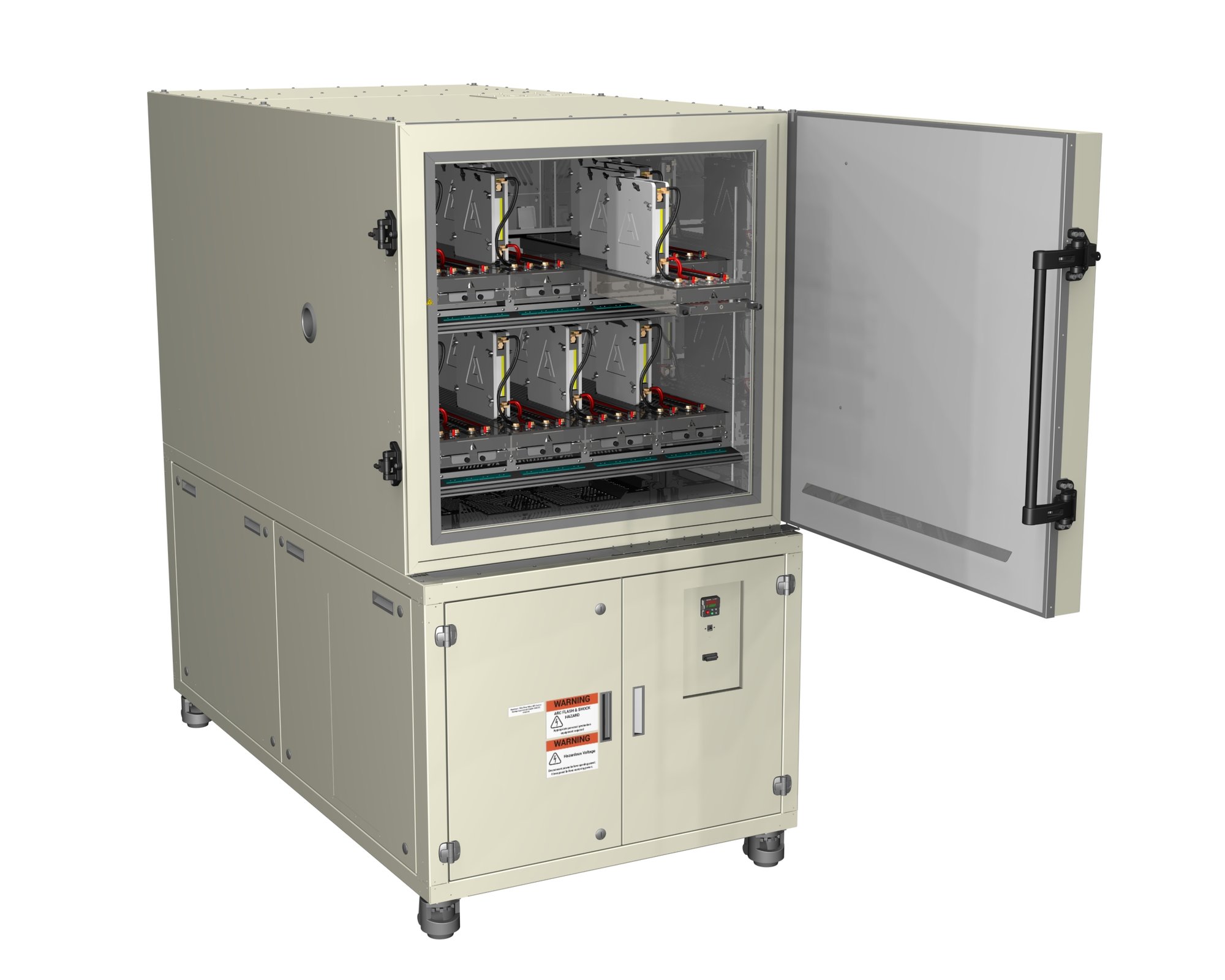
Humanoid robots depend on advanced battery systems to power movement, sensing, and onboard intelligence. Designs may include cylindrical, pouch, or prismatic lithium-ion cells, often configured into modules or full battery packs. As new chemistries and higher energy densities emerge, environmental testing becomes critical for performance and safety.
AES battery test chambers provide precise temperature and humidity control for testing batteries across development stages. When paired with battery cyclers, they support thermal cycling, charge/discharge performance evaluation, and safety validation under extreme conditions.
Ideal for:
- Cell, module, and pack-level testing
- Lithium-ion and emerging battery chemistries
- Thermal performance and safety validation
Robotic Hand & Subsystem Testing
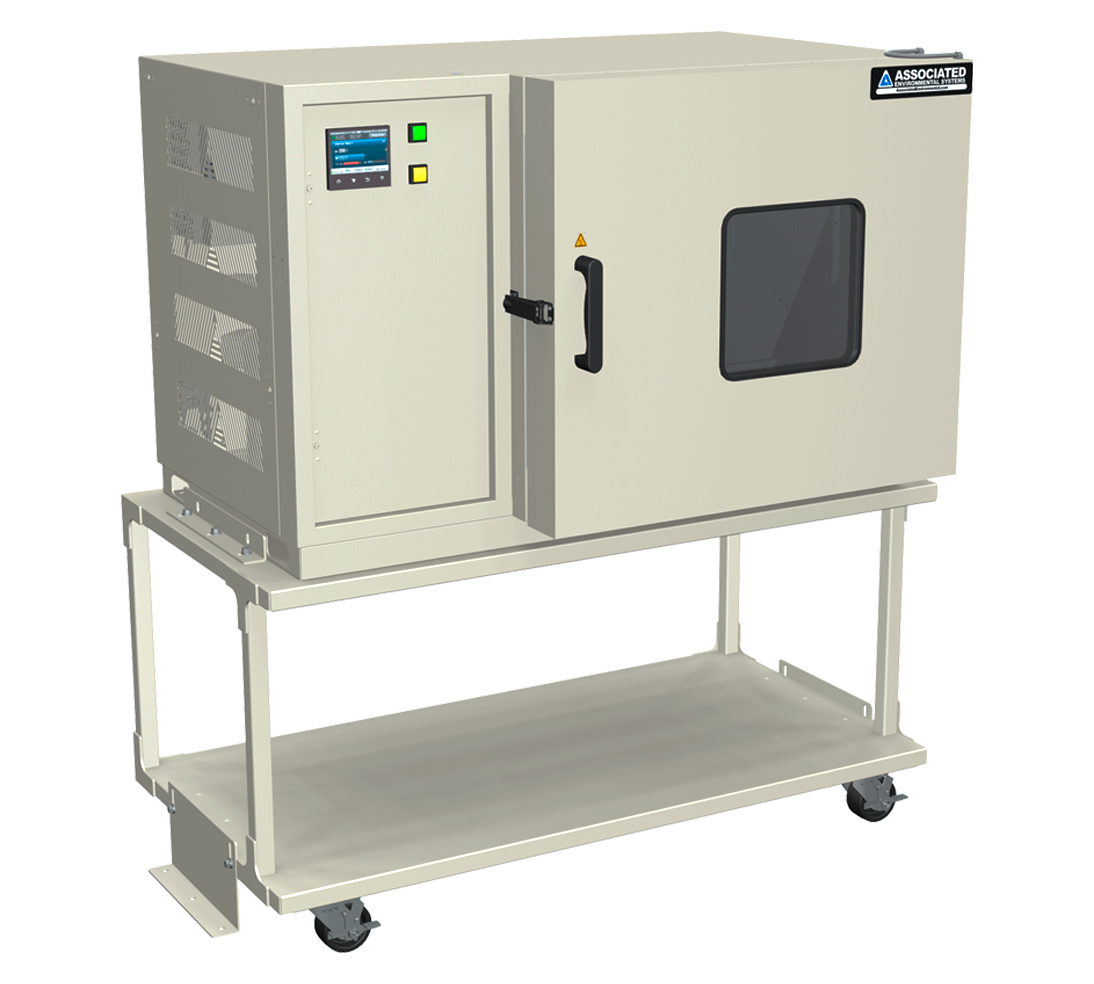
SD-508/BHD-508
Humanoid robot hands are precision-driven subsystems that integrate actuators, force sensors, tactile feedback, and compact electronics. These components must perform consistently despite temperature changes, humidity exposure, and repeated motion—often in close interaction with people and objects.
AES SD Series chambers provide temperature-only testing, making them ideal for evaluating thermal performance, material behavior, and repeatability of robotic hands and motion-critical components. For applications requiring moisture exposure or condensation risk analysis, BDH Series chambers add controlled humidity, enabling more comprehensive environmental validation.
Ideal for:
- Robotic hands and end effectors
- Temperature-only testing (SD Series)
- Temperature and humidity testing (BDH Series)
- Sensors, actuators, and control electronics