
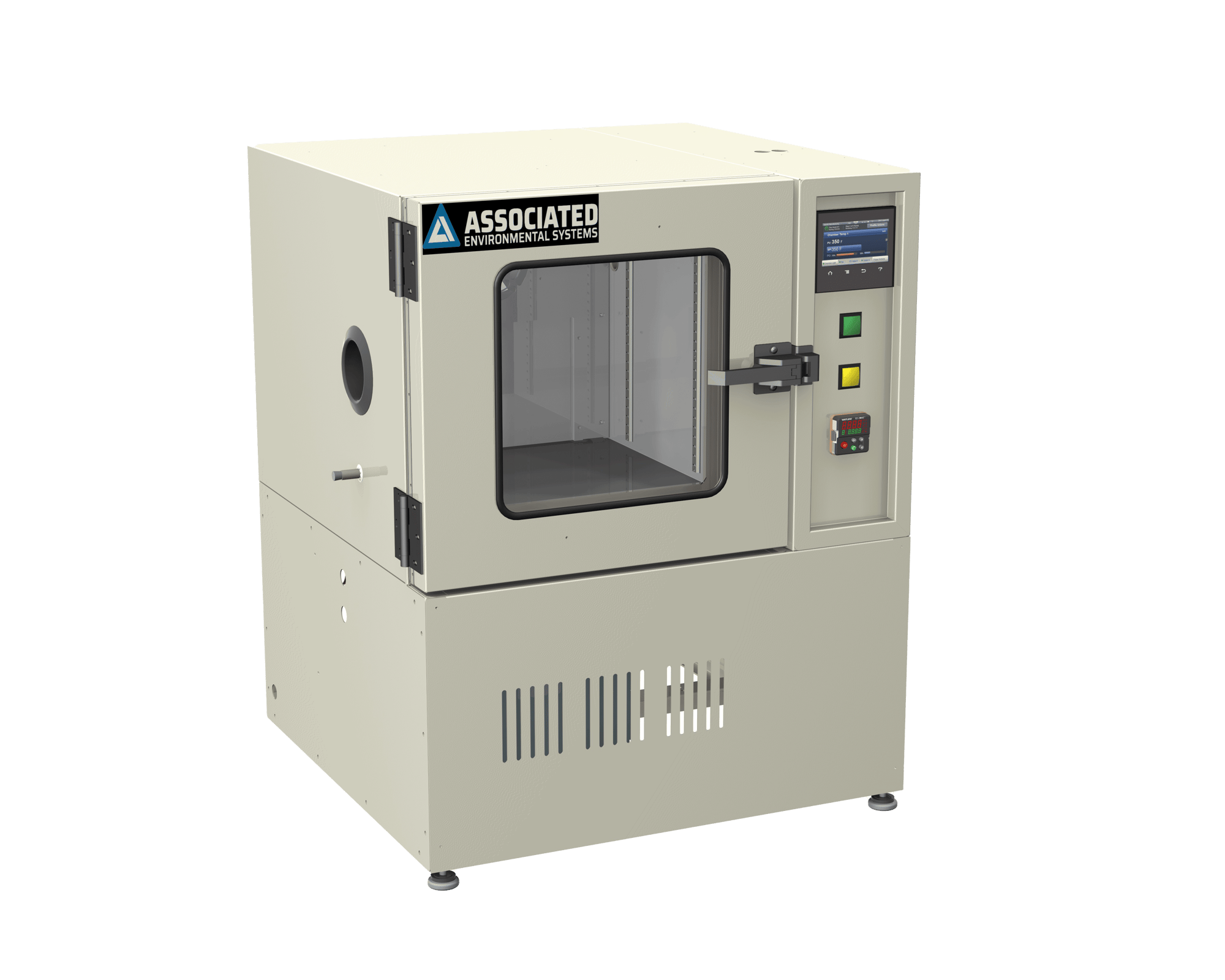
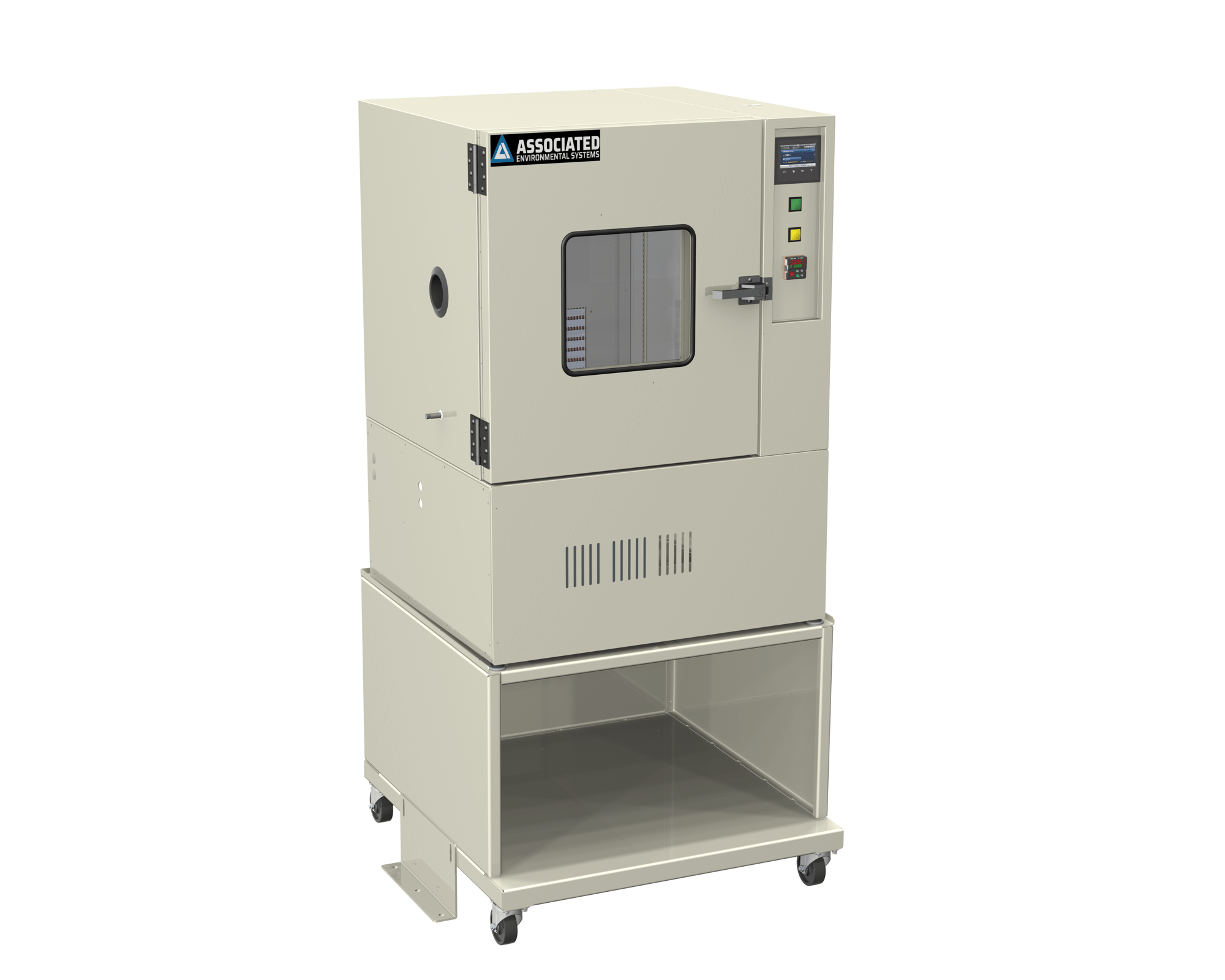
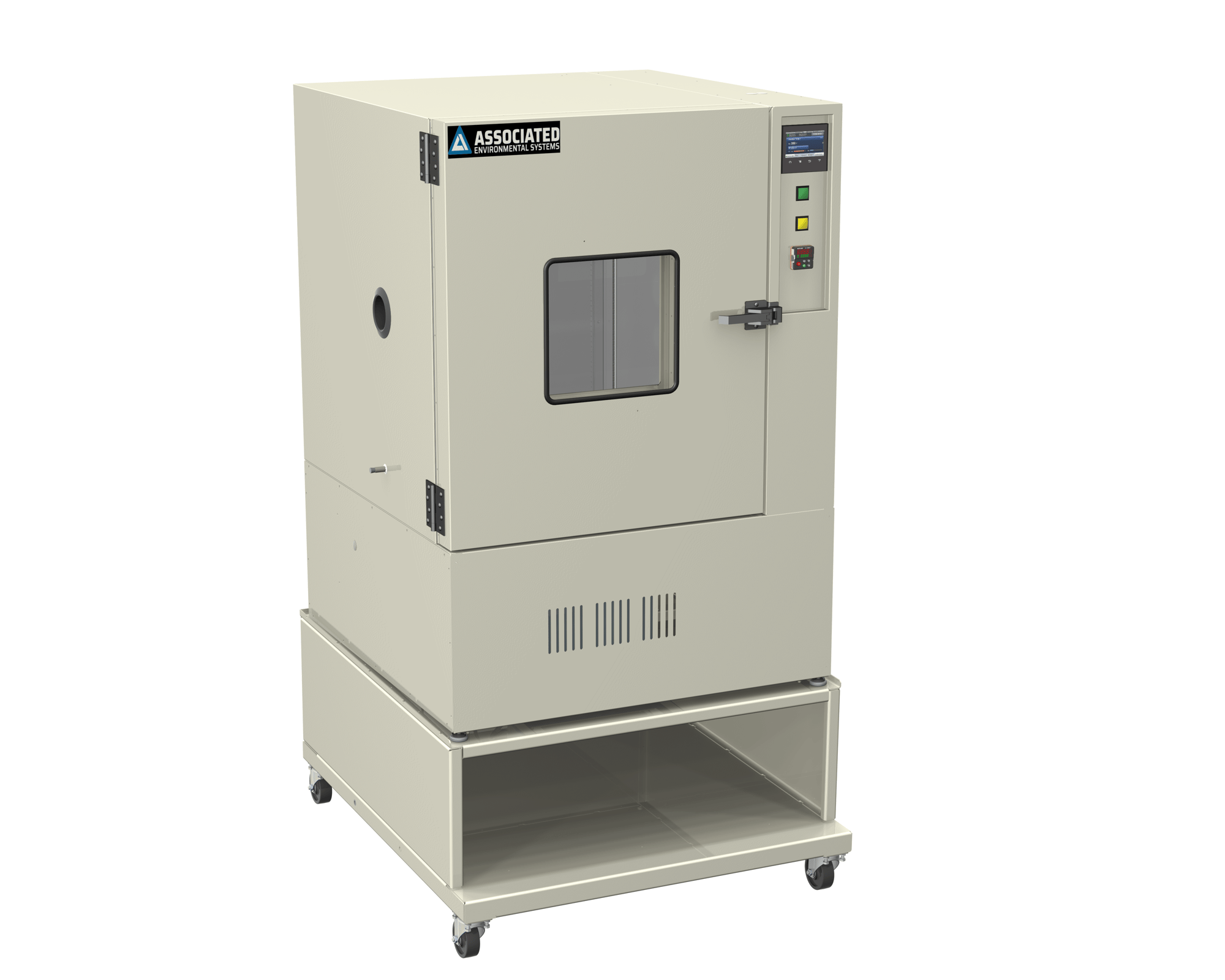
AES uses vapor generator systems to give you precise control over the humidity conditions of your chambers’ internal workspaces. The vapor generator system is a closed stainless steel or copper tube. An element heats a constant water source creating vapor or steam that travels through the tube and mixes with conditioned air in a plenum before moving into the workspace. Notably, this water source must be treated and demineralized to avoid contaminating the test.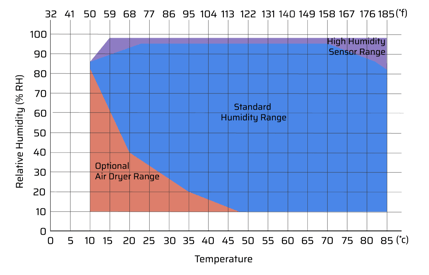
This system yields a standard relative humidity (RH) range between 10% and 98%.
Optional Features to Increase Humidity Range
High Humidity Sensors let you measure humidity as high as 98% RH.
Dry Air Purge Through Desiccant Air Dryers can achieve humidity as low as 5% RH. It compresses air through a desiccant system, absorbing the moisture before it moves into the workspace.
Dry Nitrogen Purges prevent condensation and frost from accumulating on DUT surfaces at colder temperatures by forcing out the moisture-heavy air. This also prevents the oxidation of metals at high temperatures.
Recirculating Desiccant Air Dryers are a more feasible option for larger chambers. Air is circulated through a desiccant system and then returned to the chamber, often cycled through a honeycomb wheel that releases captured moisture into the external workspace.
Associated Environmental Systems has developed a Dew Point Calculator to help you determine whether you'll need optional features for your humidity systems.

Engineered
Engineered at our headquarters in Acton, MA, where our engineering team collaborates on-site with our manufacturing floor to bring innovative designs to life.

Serviced
As the largest OEM service provider in the U.S., AES has engineers stationed nationwide to support and repair both our chambers and those from other manufacturers.

Supported
Speak directly with an AES representative by phone or chat. Our customer service team delivers lifetime support to AES chambers.