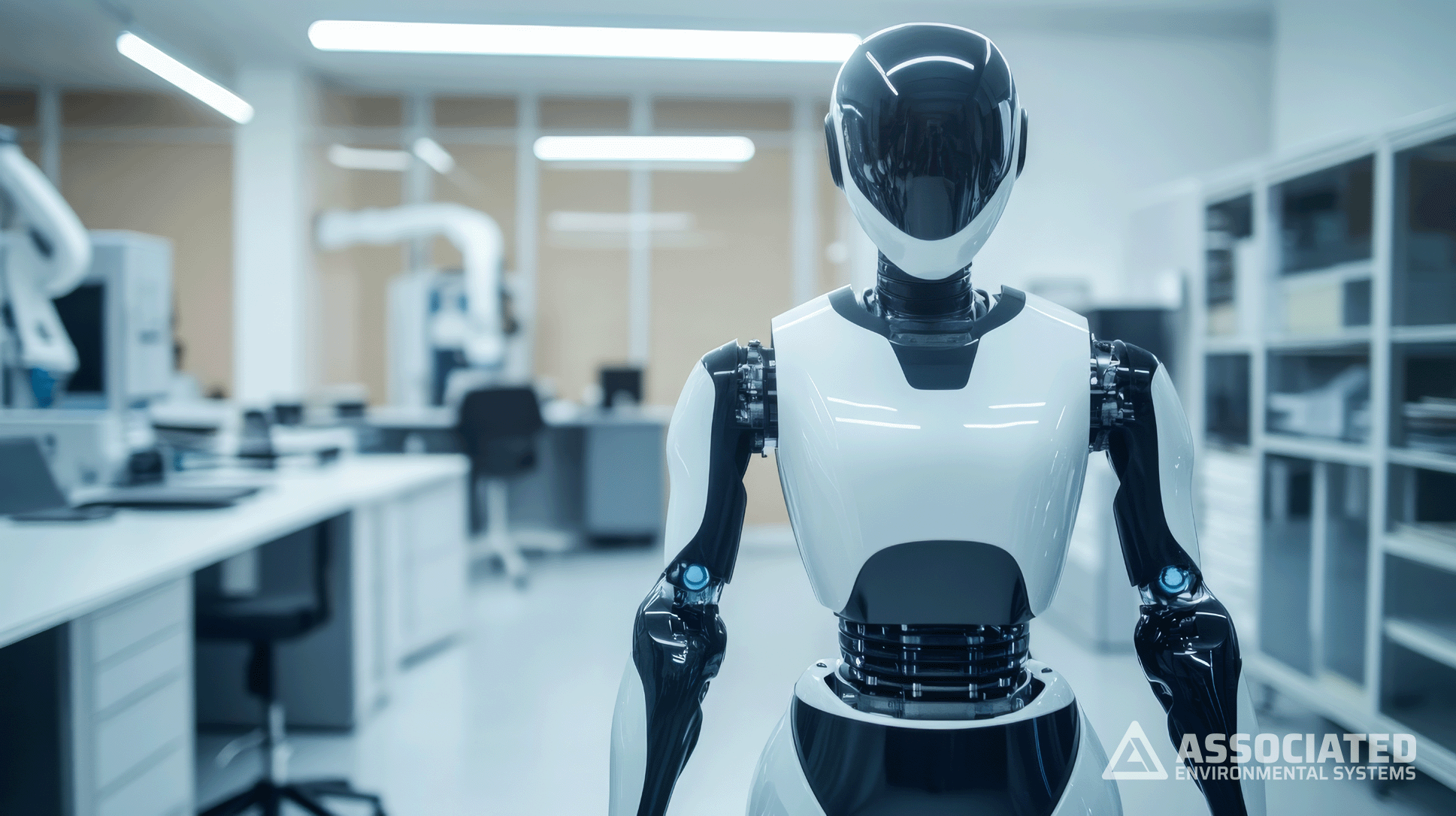
 Humanoid robots are no longer confined to research labs or concept videos. At CES 2026, Boston Dynamics among others previewed the next evolution of its humanoid robot, signaling a major shift in how quickly these systems are advancing, and how close they are to real-world deployment. Designed to operate in manufacturing, logistics, and industrial environments, humanoid robots are moving from experimental technology to practical tools.
As innovation accelerates, one critical question becomes increasingly important: how do we ensure humanoid robots are reliable, safe, and ready for real-world conditions?
The answer lies in environmental testing.
Environmental test chambers play a foundational role in validating humanoid robots at every stage of development helping manufacturers uncover failure points early, improve reliability, and accelerate time to market.
Why Humanoid Robots Require a New Level of Testing
Unlike traditional industrial robots that operate in fixed, controlled environments, humanoid robots are designed to move, interact, and adapt. Their human-like form introduces a level of complexity that demands more comprehensive testing strategies.
A humanoid robot integrates multiple advanced systems into a single platform:
- High-energy battery systems
- Complex actuator and joint assemblies
- Precision hands and end effectors
- Advanced sensors and vision systems
- AI-driven control electronics
Each of these components responds differently to temperature, humidity, and long-duration operation. When combined into a full humanoid system, even minor environmental stresses can cascade into performance issues or failures.
Environmental testing ensures these systems perform reliably—not just individually, but together.
Environmental Testing Across the Humanoid Robot Lifecycle
Environmental testing is not a final checkbox before deployment. It is a continuous process that supports humanoid robot development from early design through full-system validation.
Early Design and Prototyping
During initial development, environmental chambers help engineers:
- Validate materials and coatings under temperature and humidity extremes
- Identify thermal sensitivities in early electronics designs
- Evaluate actuator performance before designs are finalized
Testing at this stage reduces costly redesigns and shortens development cycles.
Component-Level Testing: Validating Every Critical Subsystem
Power and Battery Systems
Humanoid robots rely on advanced battery systems to deliver high energy density while maintaining safety. Environmental testing allows engineers to evaluate:
- Battery performance across temperature extremes
- Thermal cycling effects on battery lifespan
- Safety behavior under abnormal conditions
Controlled environmental exposure is essential for ensuring consistent performance and mitigating risk before field deployment.
Actuators, Joints, and Mechanical Systems
A humanoid robot’s ability to walk, lift, and manipulate objects depends on the reliability of its joints and actuators. Environmental chambers support:
- Durability testing under sustained thermal stress
- Shock and vibration exposure representative of real-world movement
- Long-duration cycling to simulate years of operation
These tests help confirm that mechanical systems maintain accuracy, strength, and repeatability over time.
Hands, End Effectors, and Precision Components
Hands and manipulation systems are among the most delicate and complex components of humanoid robots. Environmental testing ensures:
- Grip consistency across temperature and humidity changes
- Reliable tactile sensor performance
- Mechanical integrity of small, high-precision parts
Component-level chambers allow targeted testing that protects functionality without overexposing sensitive systems.
Sensors, Vision, and AI Hardware
Perception is critical to humanoid robot safety and autonomy. Cameras, LiDAR, tactile sensors, and onboard AI hardware must operate accurately in diverse conditions. Environmental testing validates:
- Sensor accuracy under thermal gradients
- Resistance to condensation and humidity
- Electronics reliability under sustained heat loads
If perception degrades, system performance and safety are immediately compromised—making environmental validation essential.
Full-Robot Environmental Validation
Beyond individual components, humanoid robots must be tested as complete, integrated systems. Full-robot environmental testing evaluates how all subsystems interact under real-world conditions.
Large-scale environmental chambers enable:
- Temperature and humidity exposure for full humanoid assemblies
- Long-duration operational testing while the robot is active
- Evaluation of thermal management during movement and load handling
Once individual components are proven, the humanoid robot must be tested as a complete system. Chambers like AES's SD-508 and BHD-508 are ideal for smaller subsystems such as hands, end effectors, and sensors, while the QUANTUM series supports full-body testing, including temperature, humidity, and long-duration operational cycles. Any of our battery testing chambers can test the compact batteries inside these robots. Together, these chambers ensure every part of the robot, subsystem or full assembly, is validated under real-world conditions.
Accelerating Time-to-Market with Environmental Testing
Environmental testing is often viewed as a requirement, but for humanoid robot developers, it is also a competitive advantage.
By identifying weaknesses early, manufacturers can:
- Reduce unexpected failures during deployment
- Shorten validation and certification timelines
- Increase confidence for customers and integrators
Environmental testing allows innovation to move faster without sacrificing reliability or safety.
How AES Supports the Future of Humanoid Robotics
Associated Environmental Systems (AES) has decades of experience supporting advanced technologies through precision environmental testing solutions. For humanoid robotics, AES provides:
- Environmental chambers for component, subsystem, and full-robot testing
- Custom chamber solutions designed around evolving robotics platforms
- Expertly engineering patented battery testing chambers able to test up to 1000 amps per channel
- Long-duration testing capabilities with full remote monitoring control via AESONE CONNECT®
From early prototyping to final validation, AES works alongside robotics innovators to ensure systems are ready for real-world operation.
From CES to the Real World
CES 2026 highlighted just how quickly humanoid robots are progressing. But real-world success depends on more than innovation. It depends on reliability, durability, and safety in unpredictable environments.
Environmental testing bridges the gap between concept and deployment. By validating performance under real-world conditions, environmental chambers help humanoid robots move from impressive demonstrations to dependable systems.
Testing the future isn’t just about innovation, it’s about ensuring that innovation works when it matters most.
About the Author